
A Day of Heat, Heart, and Heroics at the National Games
- Sports
Sophia Siddiqui
- 0
- 5 minutes read

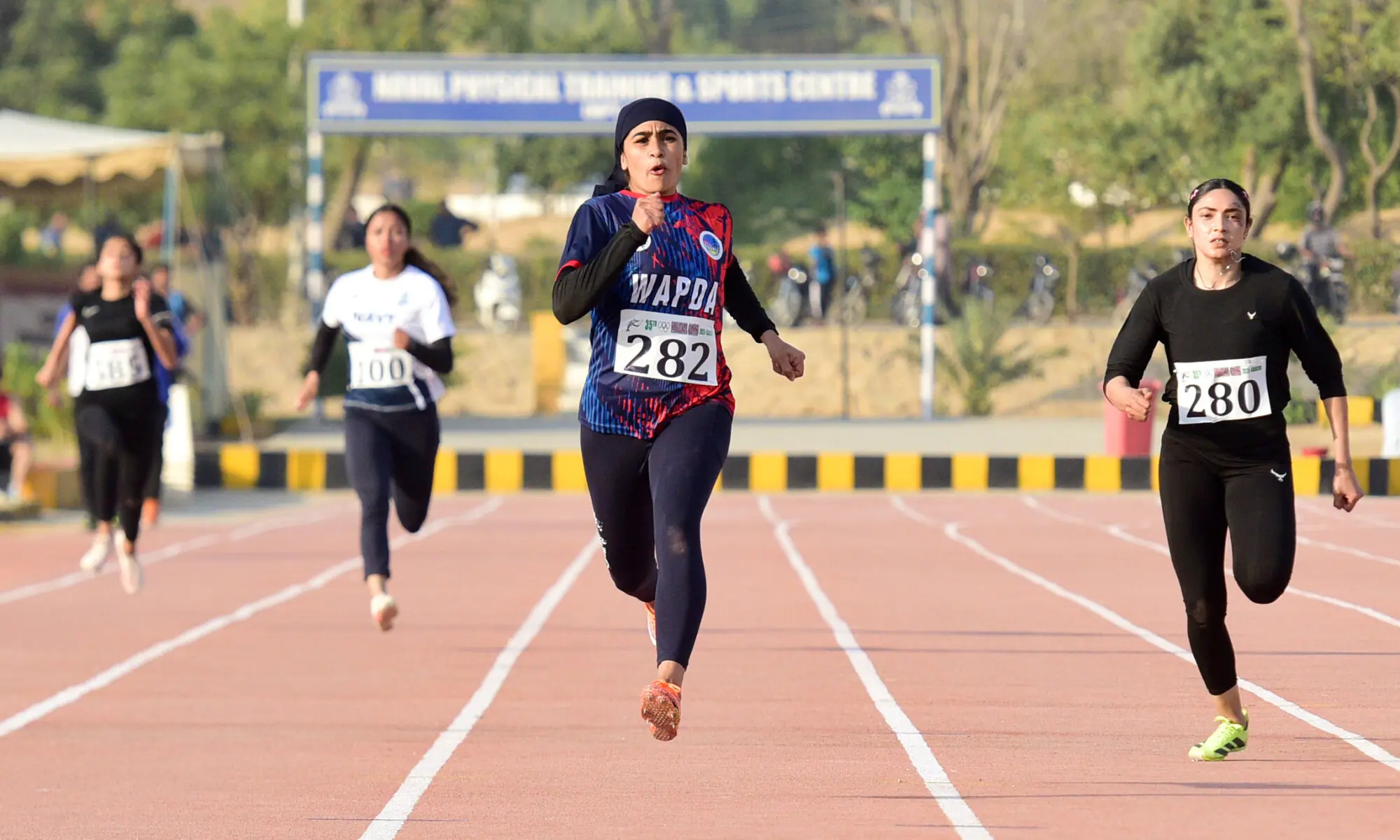
The winter calendar said December, but the sun told a different story. Its fierce, summer-like glare beat down on the athletics arena at the National Games on Tuesday, turning the field into a cauldron, yet nothing could dim the resolve of the athletes chasing national pride.
Also Read: Nine-Year-Old Kainat Khalil Stuns at 35th National Games
Across the open field, the action never paused. One corner saw discus slicing through the air. Another had hurdlers tuning their rhythm stride by stride. On the track, competitors stretched and bounced lightly on their feet, their shadows short under the burning noon light. Spectators, scattered around the stands, fanned themselves and leaned forward with anticipation as every event unfolded.
The swimming pool, shimmering under the sun, became a welcome contrast — hosting another round of competition on a day that also celebrated Commonwealth Games gold medallist Inam Butt. His victory in wrestling marked his 18th national title, extending a legacy unmatched by any athlete in his sport.
But the spotlight reached its brightest moment when discus thrower Faryal Farooq etched her name into history. For the athlete from Azad Jammu and Kashmir, the journey had been four years of consistent grind for a mere series of throws. Her first four attempts fell short, each one a reminder of the record she had long chased.
Before her final throw, her coach Ashraf Ali leaned in with quiet conviction: He would be proud if she broke the record. Those words sparked something fierce. Faryal spun, released, and the discus carved a perfect silent arc across the sky before landing far beyond the previous best. The announcer declared 38.21 meters — a new national record. The crowd erupted, and Faryal, breathless with joy, said, “I train all year for one event and try to leave my heart out in the field.”
The day brimmed with more stories of grit in the National Games
In the women’s 400m hurdles, Musarrat Shaheen of Wapda surged through the home stretch, securing gold with determination forged as much by her training as by her background. Coming from Mianwali, she spoke openly about the cultural barriers she faced in the games: “There is that backward thinking that girls should stay home. Thankfully my family is supportive.” Her medal was not just athletic success — it was a personal triumph against restrictive mindsets.
For Army’s Qasim Fayyaz, competing in the men’s 20km walk became a test of endurance against the scorching weather. Seven minutes slower than his personal best, he shared the brutal reality behind the sport: 90km of weekly road running, double gym sessions in winter, little rest, and limited nutrition support. “The body gets fatigued,” he admitted — a glimpse into the unseen sacrifices behind each performance.
In the men’s 400m hurdles, Abid Razzak delivered one of the day’s most dramatic finishe of the games. For most of the race, teammate Tajammul Hussain shadowed him closely. But as Tajammul faded in the final metres, Razzak’s late surge pushed him past the line first. He credited the victory to relentless preparation, saying, “I practiced more than my team-mate — I guess those hours paid off.”
Star sprinter Faiqa Riaz, still glowing from her 100m win the previous day, edged out HEC’s Khoula Umer Khan by just a tenth of a second in the 200m. Clocking 25.10 seconds, she pushed herself to the limit, collapsing on the track in exhaustion — the mark of a true Olympian games leaving everything she had on home soil.
Earlier events added more colour to the day’s heat-soaked narrative: Wapda’s Iram Shehzadi commanded the women’s 800m, and Amtul Rehman of HEC games soared to gold in the triple jump.
From record-breaking throws to last-lap grit, and from cultural barriers to physical extremes, the day showcased not just athletic talent but the resilient spirit that defines Pakistan’s competitors — athletes who rise above heat, hardship, and expectation to carve their place in the national story.